Exclusion in care is not simply a matter of access to services. It is also a matter of how care organisations operate, who decides, and how care work is organised.
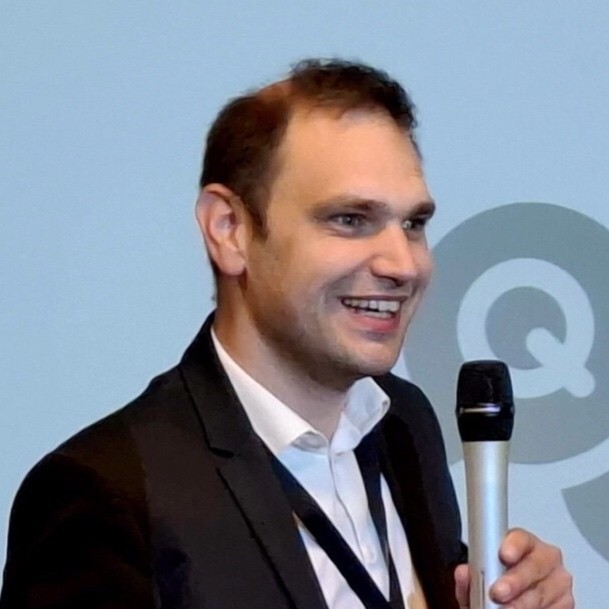
Frédéric Dufays, Assistant Professor at KU Leuven, has built his academic work around these questions, focusing on cooperatives, economic democracy, and hybrid organisations that combine social and economic objectives. With extensive research experience on democratic governance, social economy organisations, and hybrid organisations, he brings a strong organisational and governance perspective to the DICES project. As leader of Work Package 4 and scientific coordinator of the project, his work explores how economic democracy is experienced in everyday working life within care organisations, and how democratic governance can contribute to better services, fairer working conditions, and more inclusive care systems across Europe.
We had a conversation with him to reflect on his role within DICES, the relevance of economic democracy for the care sector, and what meaningful success looks like when research seeks to strengthen inclusion and reduce inequalities.
How does your work on cooperatives, economic democracy, and hybrid organisations shape your approach to the DICES project?
My research on cooperatives and hybrid organisations, which combine social and economic missions, aligns very strongly with DICES, as these organisations are a central part of the social economy, which is our field of investigation.
My expertise on economic democracy and democratic governance in cooperatives informs the project’s work on the organisational level. We look at how social economy entities organise both their services and their internal governance, and how democratic governance can contribute to better outcomes. Not only for beneficiaries, but also in terms of working conditions for employees.
Which aspect of this project do you feel most connected to, and how does your work help us understand what inclusive and democratically governed care systems look like in practice?
My role in the project is closely linked to questions of economic democracy and democratic governance. I lead Work Package 4, which focuses on the organisational level and examines how democratic principles are actually experienced inside social economy care organisations.
We are particularly interested in how employees experience economic democracy in their daily working lives, and how this translates (or fails to translate) into better services and improved working conditions. One distinctive element of our approach is a diary study, through which we collect qualitative data capturing employees’ feelings, perceptions, and emotions related to economic democracy in their organisations. This allows us to go beyond the formal structures and understand how democracy is lived in practice.
As the scientific coordinator of DICES, I also work to ensure coherence across the project. Given its multi-level and multidisciplinary nature, this involves creating connections between different perspectives and disciplinary languages, and finding common ground so that different work packages can be coherent and consistent.
In terms of reducing inequalities and strengthening inclusive care across Europe, what would you consider a meaningful success for this project?
I think I can mention three main areas of impact.
First, putting economic democracy more firmly on the agenda. It is often overlooked or treated as secondary, despite being crucial for strengthening democracy more broadly. DICES can help make its relevance more visible in discussions on care, social inclusion, and inequality.
Second, identifying and showcasing innovative practices that demonstrate how economic democracy can help tackle economic inequalities and social exclusion. Many social economy organisations act as pioneers and laboratories for social innovation, and there is a lot to learn from what they are already doing in practice.
Third, the development of pilot experiments that apply key insights from our research. This is a particularly innovative and impactful aspect of the project, as it allows us to move beyond analysis and test how research findings can inform concrete organisational and policy changes.
“In the care sector, giving voice to frontline workers and to beneficiaries is particularly important. These stakeholders have first-hand knowledge of what works, what does not, and what is missing. When they are involved in decision-making, it can lead to improvements in both service quality and working conditions.”
Can you briefly explain what economic democracy means, and how it connects to improving working conditions in the care sector?
Economic democracy refers to the idea that people who have a stake in an economic activity should be able to participate in decision-making about that activity. This can take different forms, such as organisational democracy, for example, in worker cooperatives, where employees are also owners, or through industrial relations, such as the involvement of labour union representatives in decision-making processes.
In the care sector, giving voice to frontline workers and to beneficiaries is particularly important. These stakeholders have first-hand knowledge of what works, what does not, and what is missing. When they are involved in decision-making, it can lead to improvements in both service quality and working conditions.
Democratic decision-making also tends to increase understanding and acceptance of organisational choices, even when people do not fully agree with every decision. This can lead to smoother implementation and stronger commitment. Ultimately, economic democracy is about sharing knowledge in ways that foster empowerment, for workers, for beneficiaries, and for organisations as a whole.