
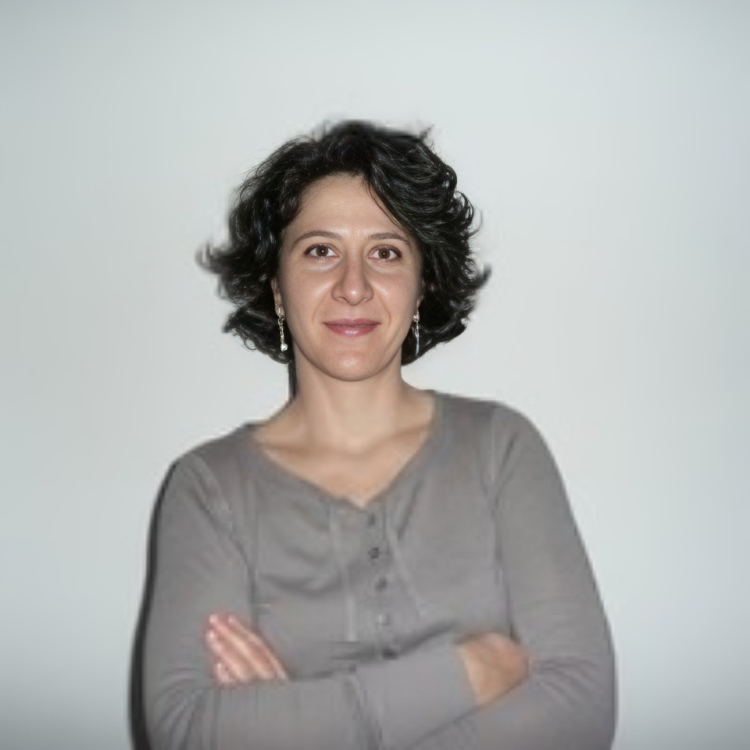
To understand social exclusion, scholars need to connect academic research with how communities experience life on the ground. Petya Slavova, Associate Professor of Sociology at Sofia University “St. Kliment Ohridski”, has spent much of her academic career working on this, examining how social groups, professions, and institutions evolve under economic and social pressure, in particular in the post-socialist context.
With over fifteen years of experience in rural sociology, work, and professional change, she brings a grounded and critical perspective to DICES, exploring how care systems are functioning and need to be transformed tor educe social exclusion across Europe and in particular in rural areas.
In this interview, she reflects on her research experience, her role within the project, and the broader responsibility of research in shaping fairer and more inclusive care systems.
What does your research work focus on, and how did that perspective shape the contribution you are hoping to make?
My work as a sociologist focuses on uncovering the mechanisms shaping communities. In recent years, I have been particularly drawn to the transformation of villages in rural areas, especially under the influence of European policies that are implemented at the national level and directly shape everyday life in these communities.
My background in rural sociology and sociology of work and professions allows me to identify diverse sources of data and to use unconventional, participatory, and experimental approaches. Through this work, I aim to reveal both visible and less obvious forms of exclusion, as well as structural deficits in economic democracy.
Could you tell us a bit about your role in the project team, and how your research connects to the goal of strengthening care systems in “left-behind places”?
Within DICES, Sofia University “St. Kliment Ohridski” is a partner responsible for conducting several complementary studies. The first focuses on mapping the social economy in Bulgaria: identifying which organisations operate according to social economy principles, the sectors they are active in, who they reach, and how they are recognised in society.
A particular emphasis is placed on the care sector (understood broadly to include health, social, and educational care) because of its fundamental role in the functioning of society.
Our second study zooms in on a specific territory, the Lovech region. Lovech was selected due to long-standing healthcare challenges, a shortage of specialised professionals working with children with special educational needs, and the presence of one of Bulgaria’s regional social economy centres, established with EU co-financing. One of the questions we are exploring is whether project funding actually reaches social economy organisations on the ground.
We are also preparing a third line of research focused on democratic principles within organisations. It is not enough for social economy organisations to contribute to society externally; they must also ensure dignified work, meaningful participation, and real access to decision-making for their employees. We aim to contribute to a better understanding of the diverse landscape of the social economy in Europe, where “one size fits all” solutions clearly do not work.
“The position of the researcher carries significant responsibility: we observe, analyse, critique, and diagnose, but we do not make decisions ourselves. Those decisions are for the communities and groups we work with to make, and they are often complex.”
This project is built on the ambition to reduce inequality and push back against social exclusion in Europe. What would meaningful, tangible success look like to you? And what role does research play in getting there?
Research plays a crucial role by collecting and analysing data that helps show what needs to change in order to improve people’s lives. It encourages reflection, disrupts routines, and brings to light mechanisms that may appear effective in the short term but prove flawed over time.
The position of the researcher carries significant responsibility: we observe, analyse, critique, and diagnose, but we do not make decisions ourselves. Those decisions are for the communities and groups we work with to make, and they are often complex. Even when change is widely supported, it is not always implemented, because change is inherently challenging.
This is why participatory action research has become increasingly important in recent years. It allows researchers to work alongside communities, jointly define solutions, and take the first steps towards change together. DICES is still at an early stage, with several years ahead. For now, our task is to map exclusion and make its mechanisms visible, so that we can contribute meaningfully to overcoming it.
One of the goals of DICES is to improve working conditions in social economy organisations. What are your expectations for how the project’s results could be used to achieve this?
DICES is particularly innovative because it questions what often seems obvious. It challenges the assumption that organisations with a social mission are automatically democratic from within. Having a declared social cause or providing a beneficial service does not necessarily mean that social economy principles are applied in everyday practice.
It is essential to understand and openly discuss what lies beneath the surface of care work and social economy activity. If we fail to recognise and improve the working conditions of care workers, and their work remains informal, underpaid, and undervalued, we risk facing a crisis of access to care, and ultimately a crisis of humanity itself. These trends are already well documented, including the growing exodus from caring professions.
Through DICES, we are working to make these issues visible and to propose solutions that can help reverse these negative developments.